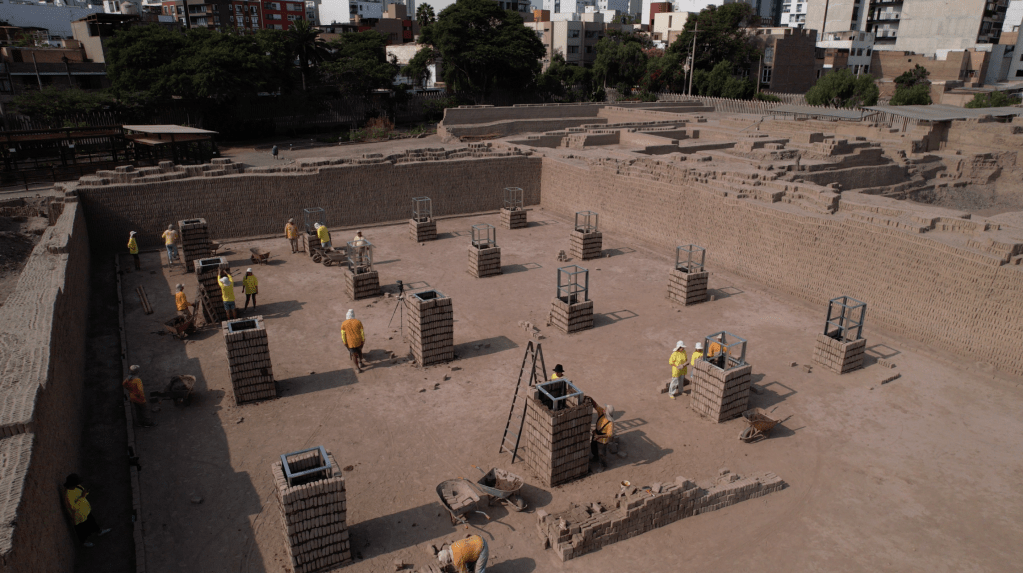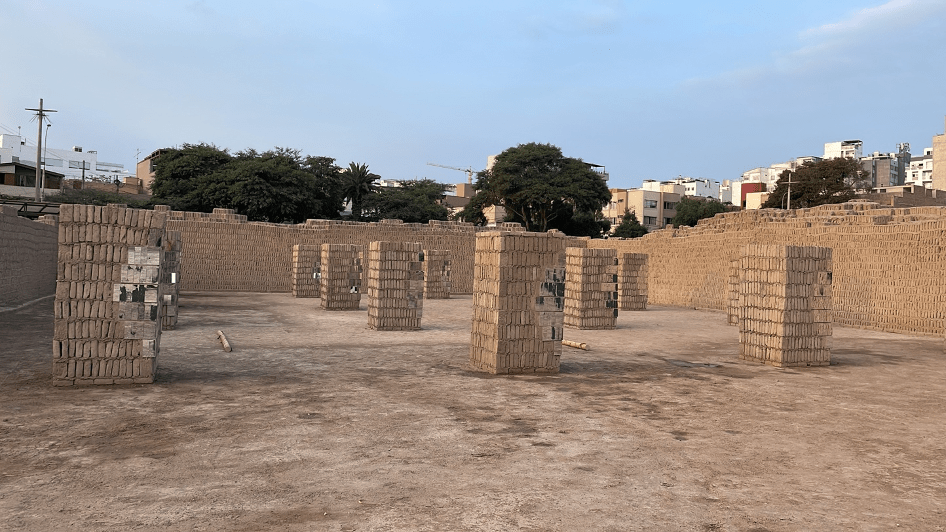
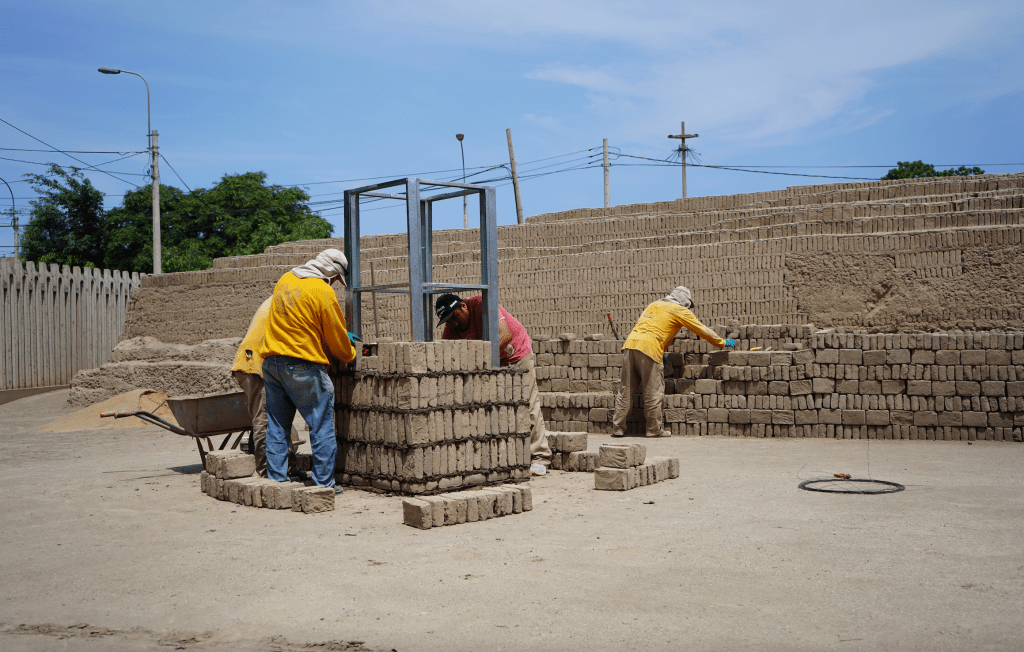
The Huaca Pucllana is one of several “huacas” (sacred sites) in Lima, which were constructed, architecturally transformed and used as sites for cultural practice by different pre- Incan cultures. Built by the Lima culture between 200 and 700 AD as a ceremonial center, it later became a cementary of the Wari culture, and was finally occupied by the late Yschma culture, whose inhabitants were farmers and fishermen and had an interdependent relationship with the ocean. Nowadays, it is one of very few well preserved, studied and visited arqueological sites in Lima. Yet, a sense of connection to those sites, histories and ancestors within lima society is overshadowed by modern urban life.
The site is a multiplicity of being in a sense of interconnection: it is a sacred place, a center for encounters between different cultures, a museum, and an entity of material and immaterial reality that are inextricably linked and interact in a network of pluriversal interaction. It goes beyond the representation of a common space; the huaca is a space with material agency. Where matter and meaning are intertwined and mutually constitute each other through a continuous process of interconnection and challenge interpretation.